At the beginning of 2021, with plenty of time on my hands, and lots to see and do around Mull, the idea was to keep this blog updated every week or so. That was until the end of May, when the world opened up properly and a tsunami of work came my way in the form of workshops and crewing days out on the boat. And welcome it was too, after the drought of opportunities caused by the pandemic.
So over the next few posts, I'll try to cover off some of what I saw and photographed during each calendar month, here on Mull.
Late May
The end of May saw me spending a few days with Oliver Wright, a friend and also a genius with macro photography. He's spent many a week here on Mull before, but was keen to visit when he heard I'd moved here, and wanted to tie the trip in with a search for insect-eating plants, namely sundews. He was hoping to find insects trapped in the sticky goo on the plants, and be able to do a stacked image of one.
We headed down to a glen near Loch Buie and proceeded to walk about five miles in search of the plants. We found plenty along the way until eventually we spotted a small clump near a stream, and insects were trapped. Having learned how to do a macro stack during lockdown, I had a go too.
Amusingly, after hiking back to the car, we discovered a pool about fifty metres from where we'd parked, which had dozens of the sundew plants in, and they had caught insects too!
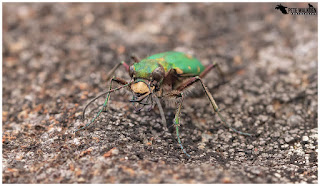
Also seen along the way was a striking and vibrantly coloured green tiger beetle, which never seemed to stay still. I managed to grab a couple of images as it scuttled around the ground, but amazingly, in one of the moments when the beetle stopped, Oliver managed to stack some images of it, and came away with a stunning shot.
June
As well as seeing Oliver up here on Mull, we welcomed first Andy for a few days whilst he was running a few workshops in June, and then shortly afterwards, Lyndsey spent a week here immersing herself in the wildlife. When possible I spent time with both, running workshops the rest of the time.
Rather than try to recount the numerous adventures enjoyed over the month, I'll post images and add some accompanying text. Most folk probably only look at the images anyway!
One of the sounds of the summer for me comes from the chatter of swallows. They're everywhere at times, even choosing to nest in the eves of the new metal shelter outside the local pub. But one old wooden building seems very popular, and I would often wait nearby to watch the antics of these acrobatic birds. A gap in the panelling gives a great look-out for them, and also makes a good frame for an image.
A bird that caught my attention on my very first visit to Mull over a decade ago was the cuckoo. It was May when we stayed, and we saw plenty of them, but I didn't get any really decent images. So this year, when their distinctive calls drifted through the glens, I was out taking images of them as much as possible. And with the amazing auto-focus of the Canon R5, I captured quite a few in flight too.
Another bird call that fills the air during the warmer months is that of the common sandpiper. They seemed to be on every shoreline during the summer, and once their young had hatched and were pottering around in the vegetation or around the stones on the shores, then the sounds became louder than ever. Mull is so quiet when they've left.
After seeing several when out on walks during the lockdown periods, it was great to spot another Irish hare on my way to collect clients one morning, and for it to still be out in the open as I headed out with them, enabling them to get shots of it too. They're usually out very early in the morning, or at dusk.
I'm hoping that 2021 wasn't a one off for breeding success of short-eared owls, as I can't recall ever seeing so many around Mull from late spring right through to August. Back in June though, when Lyndsey was here, we went out just for a mooch around the isle to see what might be about, and found a few of these, and it was amusing for someone like me, who almost obsesses about these owls, to see someone else fall for their charms.
There were signs of breeding success from resident birds like stonechats, and also from migrants, like their rarer cousins, whinchats.
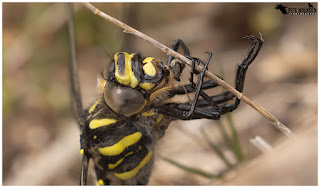
As well as birds flying around Mull, there were masses of insects too, including the striking golden-ringed dragonfly.
And basking under warm vegetation, or in this case, some corregated metal laid out, were slow worms. Adders were seen, but were always on the move.
With all the flying insects around, it wasn't a huge surprise to find birds that like feeding on them, and I saw a few warblers around, though flycatchers were generally easier to photograph. That said, this one was posing in a small coppice and the air was filled with swarms of midges. I grabbed some shots before I followed Lyndsey's actions, and fled back to the safety of the car.
With numbers elsewhere in the UK falling, it was good to see plenty of curlew around Mull, feeding on the shore and around the moors. They seemed to have quite a few chicks too.
Pipits were a common sight, with rock pipits around the shoreline, picking up insects from the drying seaweed, whilst on dryer land, meadow pipits were busy targeting insects attracted to the plentiful supply of manure from livestock.
Late May through June saw me visiting the Treshnish Isles frequently, mainly for workshops. As usual, most of the time spent with clients focused on the puffins, especially as the island of Lunga was carpeted with bluebells for several weeks. As with previous years, there were plenty of other species around, and I thought this year the number of great skuas (bonxies) had increased, as they seemed to be terrorising the smaller seabirds constantly at times.
There were differing fortunes for the eagles on Mull. While the white-tailed eagles had a brilliant breeding season, to the point that one nest raised three chicks and two other nests were able to donate an eaglet each to the Isle Of Wight project. The golden eagles struggled, with several pairs failing to raise their chicks. One did though, and proved to be a popular spot for folks to watch on from the roadside. Almost all of my eagle images from May and June were of the white-tailed variety, and mostly from the Lady Jayne as workshops were very popular aboard her, and I also spent a fair amount of time helping out Mull Charters.
Hang on, you might be thinking, you've not posted any shots of otters! Most of my workshops are based around otters, so needless to say, there were quite a few encounters throughout these weeks with the various individuals and families living on Mull. I've selected a few from these days out.
Hopefully this covers off a fair bit of what I've seen and photographed over those weeks, and provides a taste of what might be encountered should you choose to visit Mull late May through June. July will be up next, and expect more otters, eagles and puffins, as it's the month that Andy and I run our summer tours.
Looking through the windows of the Lady Jayne as she chugged into Loch Na Keal, on a blissfully calm day, could have been any other trip with Mull Charters, but this was different. I was sitting in the "driving seat" steering her as she headed down the loch in search of white-tailed eagles, and anything else that might be around.
Admittedly I didn't move to Mull to be a part of the team that is Mull Charters, but after Martin asked if I'd be interested in helping out from time to time, I jumped at the chance, and it wasn't long before I was called upon to act as a part of the crew.
Alex was the skipper for the day, and it's a role he's clearly good at, not only for being great with all things technical aboard the boat and of course informing the punters of what they're seeing and what might be around that day, but also at helping a novice like me with getting the basics sorted.
Needless to say, the eagles made the job easier, by coming out to the boat several times on each trip, and we enjoyed some cracking views.
While the trips this past week were my first as a crew member, I'd already been out aboard the Lady Jayne this year, both with family and friends, and also with clients.
The R5 does seem to struggle to identify the head and eye of the eagles as they approach, often picking up the wing tips or the tail, though to be fair on it, that's still a massive improvement on the older cameras I've used, that would focus on the sky, water or hillsides.
The images from the trips haven't disappointed though.
I've also been out for my first puffin-fix of the year, visiting the Treshnish Isles of Staffa and Lunga. The latter being the favourite location for seeing the charismatic characters themselves.
Here, the R5 was jaw-droppingly good. It picked up flying seabirds from a long way off, and maintained focus on them constantly, regardless of the background, or how good or in most cases, bad I was at tracking them, and keeping them in the preferable part of the frame.
I can't wait to get back out there to play some more.
Aside from trips, I've been looking out for great northern divers, as they're in splendid breeding plumage at this time of year, just as they fly off north to breed.
They're not easy to get close to, and serenely drift away from the shore if they spot you approaching.
Of course the otters are still around, and I was pleased to catch up with one of the families I'd been watching during the lockdown period, and the mother still has both cubs in tow. They were busy hunting one rainly afternoon, hauling out fish, crabs and even lobsters!
Not quite the incredible view I had just over a year ago with one, but great to watch and photograph, and interesting to see how they handle such potentially dangerous prey.
Mull is now feeling more like its old self again, with plenty of visitors, businesses back open again, pubs and restaurants operating almost normally, trips to see wildlife all up and running and some of the sounds of the island, such as the chattering of barn swallows, filling the air again. Let's hope some of it remains that way.
I'm not a massive flower fan, but I can't help but smile at the daffodils around the garden here on Mull, as they shine in the morning sunshine. Even on dull days, they lift my spirits, and they've had to endure some wintery weather over the last few weeks, including sleet, hail and several dustings of snow.
We're in April already, it's my first Birthday here on Mull, and the weather has been somewhat typical of the month. Sun one day, snowing the next. In fact, on some days this month, we've seen four seasons in an hour, let alone a day. But most recently, we've enjoyed some warm sunny days and it amazes me how quickly the island dries out. I've even had to water some of the potted plants.
There are signs of spring everywhere, with buds on almost all the plants, some blossom flowering and adding much needed colour to the hills, and of course migrant birds are returning to Mull with every passing day.
In March, I was beginning to wonder if I'd ever see a wheatear, envious of those down south reporting sightings, and posting images on social media. Then a familiar flash of white on a small bird flying beside Loch Na Keal stole my gaze, and I realised they'd arrived.
By the time the calendar flipped over to show the dates of April, I'd seen dozens of these striking little birds, perched beside the road, on rocks or grassy mounds, anywhere that gave them a vantage point to dart over to pick off an insect.
After seeing a lone sand martin weeks ago, it was lovely to see small flocks of these aerial masters, hawking insects over the freshwater lochs, joined by their cousins, house martins. I feel the need to stop and scan such groups of birds at the moment, in the hope of seeing a swallow among their numbers, and this paid dividends just a few days ago, when half a dozen swallows fluttered down to perch on an overhead line.
Another bird that contributes to the sound track of Mull during the warmer months is the common sandpiper. Whilst trundling round Loch Na Keal a few days back, looking for wheatears, movement beside one of the stone bridges caught my eye. I was driving, so slowed to a crawl, and watched the sandpiper poke around the structure of the bridge, before dropping out of sight, to the stream below.
Then just a day ago, I heard that familiar call, when exploring a new area of the loch we now live near, and saw another one, searching seaweed on the shore of a small sandy beach, for food. I had just enough time to line the camera up for a record shot before it took flight, skimming the water as it crossed the entrance of the loch, to continue feeding on the rocks on the other side of the channel.
Perhaps the final piece of the springtime jigsaw of seasonal birds arrived at Grasspoint recently, when I heard a cuckoo shouting his name out repeatedly. He flew off before I could line up the camera, but they're back now too. Fab!
I'm not really familiar with the north end of Mull, having spent most of my time on the isle during holidays and more recently guiding, either down the south end at Pennyghael or around the centre, focusing on Loch Na Keal and the surrounding area. So I'm exploring the area around home as much as possible, and trying to make a mental note of what species are around, and where, and in the case of migrants, when to start looking out for them.
The edge of the loch where it meets the river flowing from the glen, seems to be a fantastic area to watch waders, especially red and greenshank, oystercatchers and snipe. Curlew are also here, and their bubbling call carries up to our house day and night, such a haunting call, and one sadly fading from the rest of the UK. With snipe being around too, I've also spent time standing in near darkness in the garden, listening to that distinctive whirring sound, made by their tail feathers as they perform their courtship flights. I just need to work out the best place to get some photographs of these birds, as they're nervous and will take flight if I attempt to creep down the shore towards them.
Understandable though, with the birds of prey around the island. While the white-tailed eagles will put everything up from the water, the local buzzards seem to panic the gulls and smaller waders each time they circle overhead, and the sparrowhawks seem to get a thrill from zipping past everything like a feathery missile, scaring them into a frenzy, only to ignore them, targeting birds in residents' gardens across the loch, instead.
Having had a taste of the sky dance of another raptor in March, I have been spending a great deal of time watching areas around here for hen harriers, hoping to see some more action. As with past attempts at watching these shy birds, I've had varying fortunes, seeing almost nothing on some days, and constant action on others. There doesn't seem to be a pattern, but I think there are at least three pairs in the area, based on the males I've photographed. One appears to be in full adult colours, another has traces of his juvenile plumage and the third is very much midway through the transition from juvenile to adult.
I've seen food being taken to perhaps a waiting female, hopefully on eggs, and also other females out hunting for themselves.
The hen harriers are also increasingly becoming aggressive to other birds that stray too close to presumably the potential or actual nest sites, and I've seen them chasing hooded crows, ravens and buzzards away.
When the weather has been forecast to be fair, we have been heading further afield, and at the start of the month, drove all the way to the southern tip of Mull, taking a leisurely stroll along the white sands of Fidden Beach. Such a tranquil spot, with stunning views across to Iona, with turquoise waters, and pink granite around the shore. While the majority of the birds on show were gulls, I did see oystercatchers, wheatears, pipits (lots of meadow pipits back now too), wagtails and the ever-amusing Frankie Howerd call of an eider gave its location away, as it soaked up some sunshine on a small rock out in the bay, shared with a number of common or harbour seals.
Passing through Pennyghael on the way home, always reminds me of Dad, and I half expect to see him standing in the doorway of the cottage we used to rent, taking in that glorious view across Loch Scridain. Such memories are still difficult, as they remind me of those wonderful, happy days spent there, but also gut-wrenchingly sad, that he's no longer with us.
As it was when he first left us, wildlife always provides a welcome distraction from the grief, and we paused on our journey back, to grab some images of an otter, feeding on a scorpion fish at the edge of the loch.
And at last, we have some dates for when some sort of normality might begin to drip in. Tourists from Scotland can visit later this month, and I believe the pubs might actually open their garden gates for business. By the time our July tours are operating, I'd hope that most of the restrictions will have been lifted, and I can enjoy showing clients around this wonderful island again.